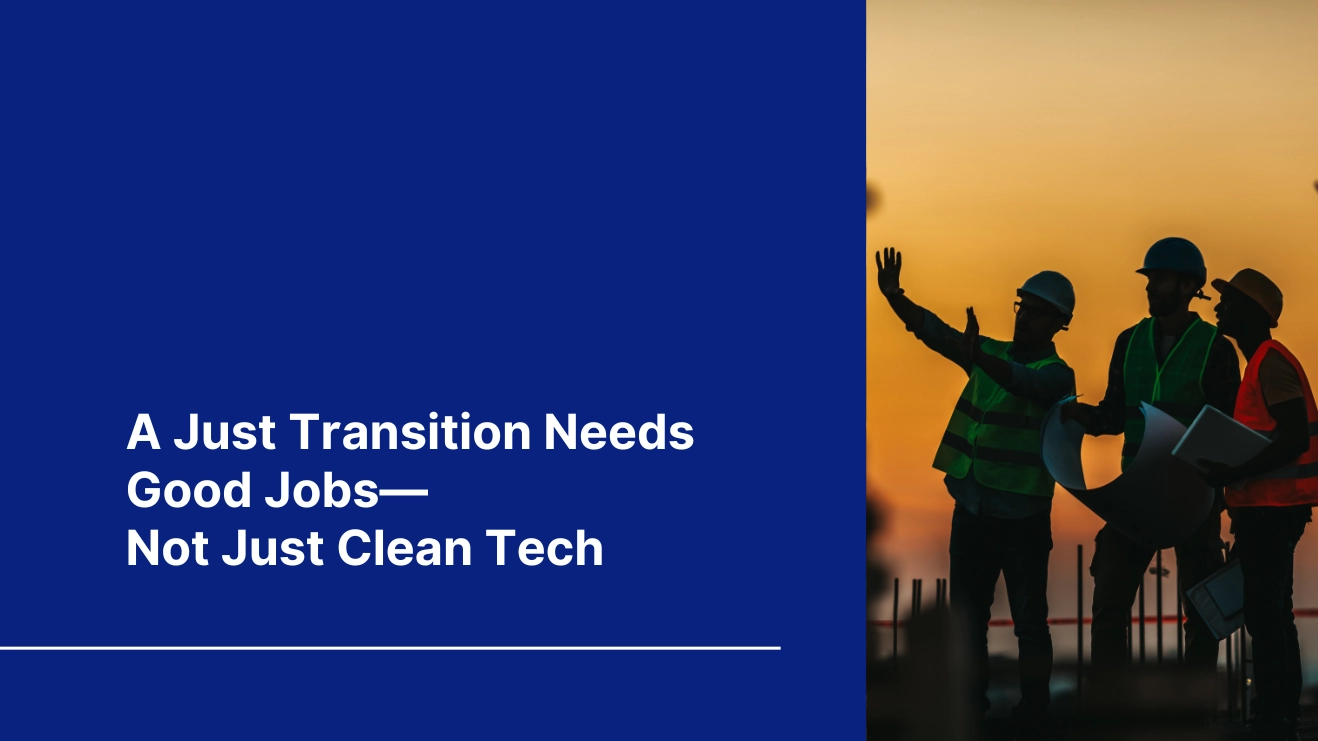
A “good job” shouldn’t be a luxury. It should be the minimum. And yet, more than 60% of U.S. workers say they don’t feel supported or secure in their roles. Globally, the picture is even more fragmented.
Good jobs are not just about pay.
They’re about dignity, safety, flexibility, voice, and growth.
So why are we still designing workplaces like it’s 1995?
When people are burnt out, underpaid, or disposable: risk multiplies.
Not just for workers, but for companies, investors, and the economy itself.
Low job quality means lower retention, lower productivity, and lower trust.
In a world shaped by climate and AI, we cannot afford fragile systems.
I’ve seen it firsthand:
On Wall Street, in tech, in global supply chains.
When we ignore the humans behind the system, the system eventually breaks.
That’s why I’m reviewing B Lab’s “Job Quality & Employer Practices” report.
It offers a measurable, inclusive, and globally scalable framework for defining what a good job actually is; and how we can build more of them.
Examples of what that looks like:
✅ Jobs that pay a living wage and offer schedule stability.
✅ Roles that include frontline workers in decision-making.
✅ Career paths that prioritize wellbeing and dignity, not just productivity.
At the Emerald Climate Fintech Summit on September 19, alongside Nicole Casperson, we’re not just talking about climate and capital.
We’re talking about people.
The ones doing the work, and the ones most impacted by system failure.
Because a “just transition” means more than clean tech.
It means good jobs.
Safe jobs.
Jobs that don’t extract. Jobs that uplift.