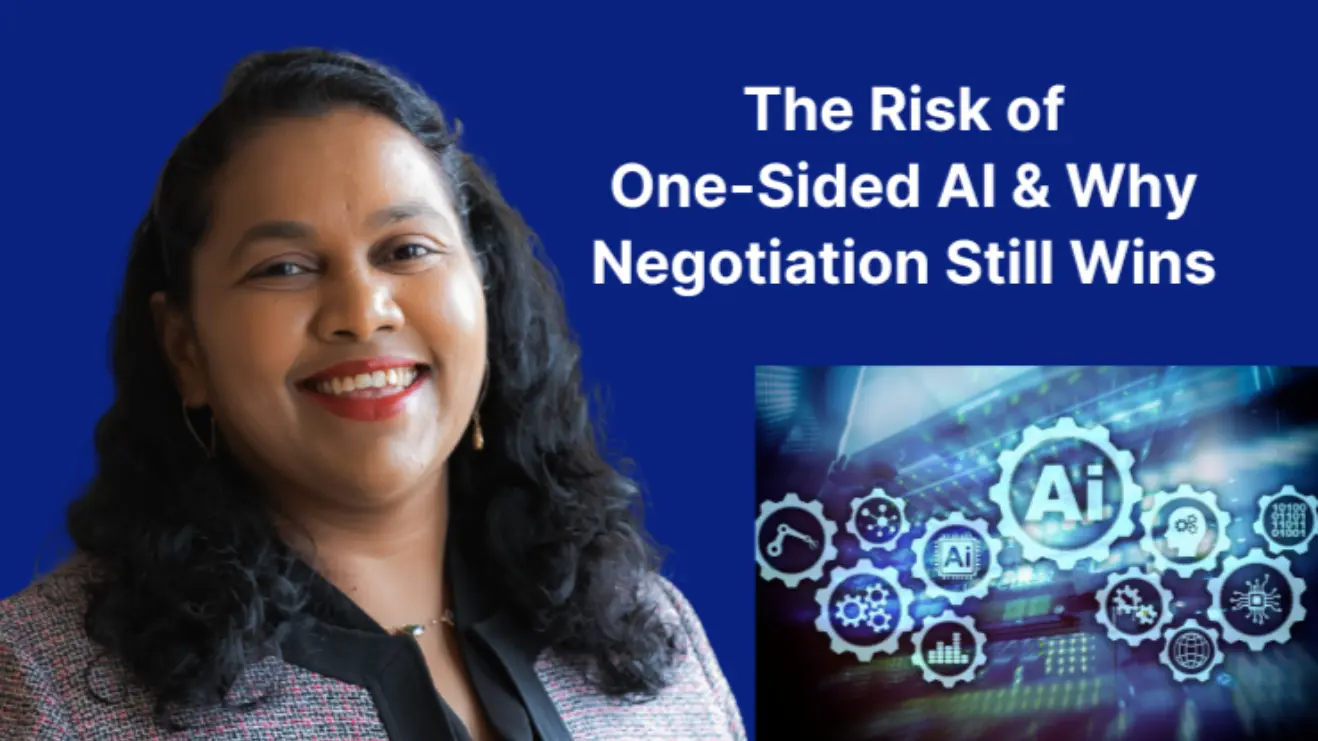
In a world of algorithms and automation, negotiation is still the most human risk and the most strategic one.
Before We Dive In
Most people treat negotiation as confrontation. But in truth, it’s collaboration under pressure: a structured way to balance risk, power, and trust.
The irony is that as AI automates more transactions, the ability to negotiate is becoming rarer and more valuable. Autofill forms, preset prices, one-click contracts: all convenience, no conversation.
Whether you’re an executive aligning teams, a founder raising capital, or a professional navigating pay and priorities, the risk of not negotiating is the same. You accept defaults someone else designed.
AI can optimize efficiency, but it can’t read nuance, context, or emotion. That’s where human negotiation still defines the outcome.
When Automation Ends the Conversation
AI systems increasingly decide how we buy, sell, and even compromise. Pricing engines adjust in real time. Algorithms match job offers and ad budgets. Investor platforms auto-screen founders.
All of it saves time and erodes intentionality. When everything feels predetermined, fewer people pause to ask why.
The danger isn’t only financial. It’s cultural. Teams stop advocating for their priorities. Entrepreneurs stop framing value beyond valuation. Employees stop testing the boundaries of fairness.
AI thrives on predictability; negotiation thrives on discovery. And if we automate away that tension, we lose the muscle that protects equity, creativity, and shared growth.
How to Negotiate in an AI World
Good negotiation today isn’t about dominating. It’s about designing fair systems where both sides stay informed, flexible, and human. Here’s a framework that works across boardrooms, startups, and personal life:
- Name the Hidden Algorithm. Every situation has one: a pattern, process, or bias that quietly decides outcomes. Surface it early. Ask, “What system are we really negotiating with?”
- Redefine Leverage as Knowledge. In the AI era, information isn’t scarce. It’s filtered. The one who contextualizes it fastest holds the real power.
- Create Space for Friction. Don’t rush to agreement. Friction reveals values. The best negotiations balance empathy with healthy resistance. It’s how trust takes shape.
- Build Win-Win-Within Systems. Don’t just settle this deal; design the process so the next one’s easier. Negotiation isn’t a transaction. It’s an upgrade to the system itself.
Negotiation, when done well, isn’t defensive. It’s design thinking for relationships.
A Small Experiment for This Week
Try this Negotiation Readiness Audit (personal, professional, or business):
- Choose one area where you’ve accepted a default: a recurring expense, a contract term, a workload, or a career assumption.
- Ask what would happen if you negotiated it. What data or insight would strengthen your case?
- Map both sides’ incentives. What outcome would make each party feel they gained more than they gave?
- Draft the “win-win” sentence. In one line, describe the ideal mutual benefit. If you can’t, you’re not ready to negotiate.
- Rehearse with AI but decide with humans. Use tools to simulate objections or model options, then take the real conversation offline.
Negotiation isn’t about getting more. It’s about learning faster, together.
From Insight to Action
If this topic resonates, explore my Executive Edge Expeditor: a strategic training and coaching experience for professionals and leaders who want to turn conversation into influence, and influence into opportunity.
💼 Learn how to negotiate better deals, lead with clarity, and build systems that make your value visible.
And for founders: Join me for the next Startup Growth Playbook: a bi-weekly LinkedIn Live where we turn everyday growth risks into practical playbooks.
- 🎥 Next session: Startup Growth Playbook: Turn Your Why Into Investor Confidence
- 📅 November 12, 2025 @ 3:00 PM ET
- 🔗 RSVP → https://luma.com/BusinessGrowthNOV12
Together, these sessions build one continuum: from how you negotiate personally to how you scale organizationally.
🎥 Watch the October sessions:
- Startup Growth Playbook: How to Convert Early Users Into Paying Customers → Oct 1 Replay
- Startup Growth Playbook: Unlocking Angel & Venture Capital for Founders → Oct 15 Replay
- Startup Growth Playbook: Securing Angel Investment – Raise Your First Round → Oct 29 Replay
Closing Thought
Negotiation isn’t conflict. It’s calibration. AI may automate logic, but humans still negotiate meaning.
Every time you step into a conversation that could go either way, you’re practicing risk intelligence: balancing information, empathy, and courage.
Because the future doesn’t belong to those who avoid negotiation. It belongs to those who can transform disagreement into design and keep the human in every intelligent system.